Ranking high on Google Search can help your website get more visibility and organic traffic. In fact, Google Search handles 13.7 billion searches each day, so your position in the rankings ultimately impacts your organic traffic. However, understanding and implementing the ins and outs of the Google algorithm is not simple.
Google has several ranking factors that determine which website they want to show first. To top it off, the Google algorithm constantly keeps updating and changing. It is the algorithm that determines numerous ranking parameters. In this article, I’ll break down important ranking factors that will make a difference in your rankings.
What is a Google Ranking Factor?
It is a criterion used by Google’s search algorithm to determine which webpages are shown in the results when a user runs a search. For example, if a user searches for the best pet toys on Google Search, Google’s algorithm will display content that meets the user’s requirements.
The algorithm may consider numerous factors to determine the relevance of a webpage. This may include quality, relevance, mobile-responsiveness, load times, etc. The goal of the algorithm is to provide users access to the best content and solve their search queries.
How Does Google’s Algorithm Work?
Google and other search engines work by following a simple process that helps it find and rank pages. This includes:
- Crawling: Google discovers webpages through sitemaps or by following links. Google Crawlers are automated software programs that discover, download, and scan these pages.
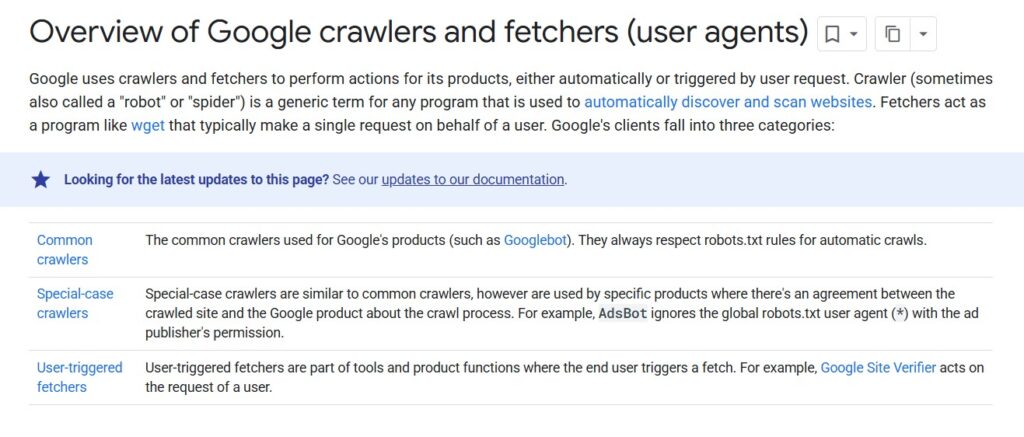
- Indexing: Once the crawlers scan the website, Google will analyze whether it should be indexed. Google doesn’t index pages if it doesn’t think they are original or of the highest quality.
- Ranking: When somebody performs a search, Google will decide which indexed page it will show and in what order. The algorithm decides which pages are better suited for readers.
Top Ranking Factors Used By Google To Rank Websites
Ranking factors help Google determine and decide which page deserves a higher position in search results. However, it is important to note that you don’t have to match all its signals, as Google uses hundreds of signals. It is important to maximize signals that give you the most benefits. Let’s look at them below.
1. Content Relevance
Content relevance is one of the most important factors that helps your webpage rank on top of Google. The search engine tries to understand the search intent of the user and provides the content they want.
Google classifies search intent into informational, commercial, transactional, and navigational subcategories. If you want to learn user intent for a particular term or keyword, you can enter it on Google and see what pages are ranking. The algorithm will display pages it considers most relevant. Your content has to follow a similar structure if you want it to rank.
On-page SEO optimization can help drastically improve content relevance. Try to seed keywords organically in your content and different sections. Effective areas you can add keywords include the title tag, URL slug, heading 1, body text, and meta description.
2. Content Quality
Content is king, and in the case of Google ranking factors, quality of content has a major impact. Google will prioritize content that is fresh, unique, and helpful to rank higher on SERPs. This is why Google follows its Experience, Expertise, Authoritativeness, and Trustworthiness (E-E-A-T) formula. The formula plays an important role in evaluating and understanding content quality.
If you are looking to publish quality content, then you can
- Publish information that offers value and meets users’ search intent.
- Add value to content that already exists on other pages.
- Cite sources to make content more credible.
- Offer firsthand experience
- Build trust by asking experts to verify your content and build trust amongst readers.
If you’re looking for content that leaves an impact, then look no further. I’m a seasoned content writer with 6+ years of experience crafting high-quality and SEO optimized content that ranks.
3. User Experience
User experience is another important factor that influences Google rankings. A page that is easy to scroll and pleasant to use can pave the way for better rankings. Search engines rank pages higher that load faster and are easy to navigate, following best SEO strategies. These are some of the foundations of SEO in the digital space.
Search engines also prefer mobile-friendly pages, as over 60% of Google searches occur on mobile devices. This is why having an easy-to-navigate website on mobile is important. Additionally, try to avoid any annoying pop-ups or ads on the page.
If you are a WordPress user and want to build a user-friendly website, then check my review: How to build a WordPress website.
4. Backlinks
Backlinks are inbound links from other websites that help elevate your webpage authority. This helps Google classify the content as valuable and trustworthy. Websites with a large number of backlinks are more likely to rank higher compared to those with a lower number.
If you are in a competitive niche, then backlinks can help your work rank. And if you’re able to get backlinks from your niche, your value in the space will drastically go up. It is thereby is essential to craft link-worthy content. This can be achieved by providing deep insights and original research.
5. Website Structure
The website structure is an important characteristic of a successful website. If the structure is simple, with few subdirectories, crawling and indexing become much easier.
Another method to speed up the indexation process for new or updated content is by creating a sitemap. These sitemaps have information about important website pages, which search engines need to know about. Using these sitemaps, Google crawlers navigate your website and discover new content.
6. Website Security
Website security is a key Google ranking factor. Make sure your website is using the HTTPS protocol. This helps encrypt data between your website and the user’s browser. In 2014, Google confirmed that HTTPS is a ranking signal. If your website doesn’t have an SSL certificate, you must update it.

7. Topical Authority
Topical authority is the concept where search engines recognize a website’s expertise with subjects relevant to your brand. Establishing credibility and authority can enhance your rankings on the internet.
The best way to build topical authority is to create
- Pillar and cluster pages: Create a pillar page and link it to core subjects
- Content depth: Focus on publishing content on the core niche rather than different articles.
- Intentful content: Effectively answer short, mid, and long-tail questions users search within your niche.
- Strategic Internal Links: Connect articles efficiently through links so search engines and AI models can map the relationships.
Common Disputed Ranking Factors
There are some misconceptions in the industry, but they don’t really affect website ranking as per Google’s algorithm. Some key aspects of this are:
- Domain Age and Authority: An older website or higher domain authority doesn’t help your website rank. It’s the quality of content and relevance that matters. However, old websites may rank well as they may have more backlinks.
- Bounce Rate: It is an analytical metric that tells you how fast visitors leave your website without any interaction. As per Google documents leaked in May 2024, bounce rate doesn’t impact rankings.
- Keyword Density: There is a common misconception in the SEO community that you need to seed a certain phrase numerous times in a page. However, this doesn’t make your content relevant to Google’s algorithm.
- Word Count: There is no perfect word count when covering a topic, as long as it is high quality and relevant.
- Social and External Shares: Social shares don’t necessarily act as ranking signals to search engines.
Mastering Your Google Ranking Strategy
Understanding Google’s ranking factors is not as simple as it seems. However, if you want to optimize Google’s ranking factors, you need to focus on crafting high-quality, relevant, and user-friendly content. When you offer a seamless user experience, you can align your business strategy with Google’s mission to provide the best search results.
Google’s ranking strategies are not fixed, so it is important to be adaptable. You need to be ready for algorithm updates and refine your approach to achieve long-term success on the internet.
Struggling to make your website SEO friendly and rank? Don’t worry, I’ve got you covered. Get in touch with me, and I’ll help craft a specialised plan to elevate your Google search rankings.



Frequently Asked Questions (FAQs.)
- 1. How to rank on Google?To rank on Google, you need to focus on three main areas: on-page content quality, content relevance, and technical website performance. Based on these factors, Google uses crawlers to index and rank the pages.
- 2. How long does it take to rank on Google?It typically takes 3 to 6 months for a new page to rank on Google. However, for competitive keywords, it may take longer. Overall, the ranking factor depends on the content quality, relevance, backlinks, user experience, etc.
- 3. How often does Google update its algorithm?Google rolls out minor tweaks to its algorithm each day, which are unnoticeable to most users. Broad core updates are rolled out 3 to 4 times a year, and their impact is vast across SERPs.
One response
[…] is where pages that are ranked by Google help the AI module. So, focus on SEO fundamentals. However, your business has to pay close […]