Achieving visibility on search engines can pave the way for your growth on the internet. Google is the top search engine on the internet. However, did you know that 96.55% of websites don’t get traffic from Google? This is because it follows a set of ranking factors that are the cornerstone for ranking websites.
These ranking factors have a complex algorithm that looks at a web page’s authority, relevance, and user-friendliness. All these factors decide the ranking in the search results. This is why website owners or marketers have to optimize their website based on these factors to achieve sustainable visibility. In this guide, I’ll cover some critical ranking factors and how you can optimize them to achieve online visibility.
What are Google Ranking Factors?
Google’s algorithm uses numerous factors to help Google rank websites in the digital world. Based on these factors, Google determines which pages are shown in the results when a user runs a search. The core components of its criteria include relevance, quality, user experience, authority, and website structure. Additionally, user location and search history also influence the ranking factors. These ranking factors are a huge part of SEO strategy, paving the way for digital success. Overall, the ranking factors are designed to meet user intent and solve their search queries.
Which Google Ranking Factors Are Most Important and How to Optimize Them
There is no specific list for the most important factors, as it depends on your business and niche. However, below are some of the factors and ways to optimize Google’s ranking factors.
1. Content Ranking Factors
Content is a key factor as users come to your webpage to find appropriate information. Google prefers websites that provide helpful, relevant, and quality content to users. Let’s learn more about content-related factors below.
A) Content Quality
Google prefers content that is of the highest quality and helpful to readers. Content that has original research, information, and analysis is preferred. The content piece should cover the topic in full and in detail and should avoid thin content. If you have quality content, then it automatically outweighs other pages in search results.
Try to craft content that fulfills search intent and not simply focus on optimizing it for Google. It is important to remember that you are crafting content for potential customers, so quality and optimized content is the gold standard. Additionally, update your content to keep it up to date.
B) Content Relevancy
Google results are based on how relevant they are to the search query. The search engine tries to understand the user’s search intent and provides the content they want. Its relevancy is based on whether the content provides helpful information and offers commercial, transactional, or navigational value. Content that doesn’t match a dominant keyword may struggle to rank.
To craft relevant content, perform extensive research on a topic before writing the content. You can check existing pages that are ranking on SERPs and accordingly plan your content structure. Additionally, you can perform Keyword Research through popular SEO tools, like Surfer, and understand the intent of your keywords.
C) Trending and Fresh Content
Trending content is something that Google prioritizes to fulfill time-sensitive queries. This may include breaking news, regularly recurring events, new developments, etc. It is also important to update your evergreen content regularly with updates to keep it fresh. These are important parameters if you want to improve your ranking on Google.
To optimize for these ranking factors, try to craft content that is newsworthy and trendy. Make sure your publication date is updated, so that Google knows it’s up to date. However, don’t simply update the date without meaningfully updating the content.
2. On-Page Ranking Factors
On-page optimization helps Google understand how your content is organized on your web page. It can play a major role in improving content relevance and help Google’s algorithm match it to relevant queries.
A) Title Tags
Title tags describe the content of a page to Google. Click-worthy headlines can draw heads and earn better organic traffic. Pages that have target keywords in their title tags rank better. Make sure that the titles describe the page and sections carefully. Try to optimize the title tag by keeping it under 60 characters, so that Google doesn’t cut it in the results. Apart from the title tag, ensure that you have subheadings that also describe the page.

B) Keyword Seeding
Keywords act as the foundation of your content strategy. Google and other search engines use keywords to help identify the intent of the page. Try to seed keywords strategically in the title, meta description, and URL to get more visibility. Make sure that you don’t stuff keywords, as SEO and ranking factors have evolved.
C) Internal Links
Internal links allow you to distribute authority for content pieces throughout your website. You can strategically place links in your webpages to help other pages perform better. Insert links that are relevant to the content, as it helps both Google and users understand the linked content. Try to insert at least one internal link to each page. Additionally, try to link to high-authority content on the pages you want to rank.
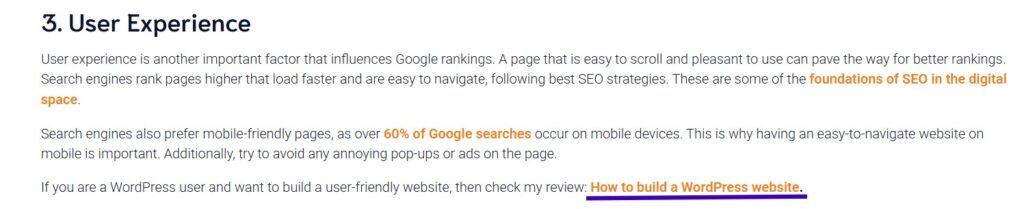
3. Backlinks and Authoritative Ranking Factors
Backlinks are links of authority coming to your website from other pages. This vote of confidence signals Google that your content is trustworthy.
A) Backlink Quality
Backlinks are a sign of authority, but not all backlinks are equal or beneficial. If you get a backlink from a highly reputed and authoritative website, the benefit will be higher. A single quality backlink is better than getting a large quantity of backlinks, especially from spammy directories. You can check backlinks quality through free backlink checker on the internet.

The best way to get quality links is to craft original content that offers value to readers and is linkable. Try to reach out to industry leaders, focus on digital PR, and provide contributions on other webpages to get links. Avoid link farming or paid links as they can trigger penalties from Google.
B) Referring Domain
Backlinks from websites across different domains can give you more visibility. It is the dream of website owners to get links from leaders in their niche. However, if you get links from different domains, it is a big win. So, try to get backlinks from multiple domains rather than accumulating links from the same page.
C) Backlink Relevance
Backlinks from your niche have more authority than links from other niches. If you’re running a cooking blog, you would not want to get links from the digital marketing space. Try to do guest posts on sites having higher topical authority rather than any linking opportunity.
4. Technical Ranking Factors
Technical SEO is based on how search engines can move through your pages. Search engines work by crawling and indexing pages. So, sites with any technical problems won’t rank on search engines. Google aims to provide a good user experience, and thereby it is a key ranking factor. Some key vitals include:
A) Mobile-Friendliness
Users predominantly use mobile devices to access Google; this is why it uses mobile-first indexing. Websites thereby need to be well-optimized for mobile devices to rank high on SERPs. Your website needs to have a responsive design fit for screens of different sizes. Whenever you make any changes to your site, ensure that it works properly on mobile devices.
B) HTTPS/SSL Certificate
HTTPS is a security parameter that helps encrypt data between your website service and users’ browsers. You need to have an SSL certificate if you want to have an HTTPS site. Install an SSL certificate from your hosting provider. Hostinger offers a free SSL certificate across all its plans. The platform is quite affordable, and you can create a website within 30 minutes.
C) Core Web Vitals
Google uses Core Web Vitals to measure the loading speed of your site. These three core web vitals include:
- Largest Contentful Paint (LCP): Measures loading performance.
- Interaction To Next Paint (INP): Measures website responsiveness
- Cumulative Layout Shift (CLS): Measures visual stability
You can optimize these core vitals by compressing your images and minimizing your CSS or JavaScript. You can use external tools to check which pages are affecting the core vitals of your website.
5. Local Ranking Factors
Whenever there is a local query, Google uses local ranking factors to fit the intent. Local SEO is different from traditional SEO; below are two signals that influence local rankings.
A) Relevance
Google closely checks how your business matches the user’s query. For example, if a query is targeting a location-specific keyword, then pages close to the area will pop up. Your Google Business Profile (GBP) displays information about the location of your business. Ensure that your website has location-specific pages that are optimized for local keywords. Additionally, ask customers to leave reviews on your GBP profile, so Google can consider your brand to be trustworthy.
B) Distance to Searcher
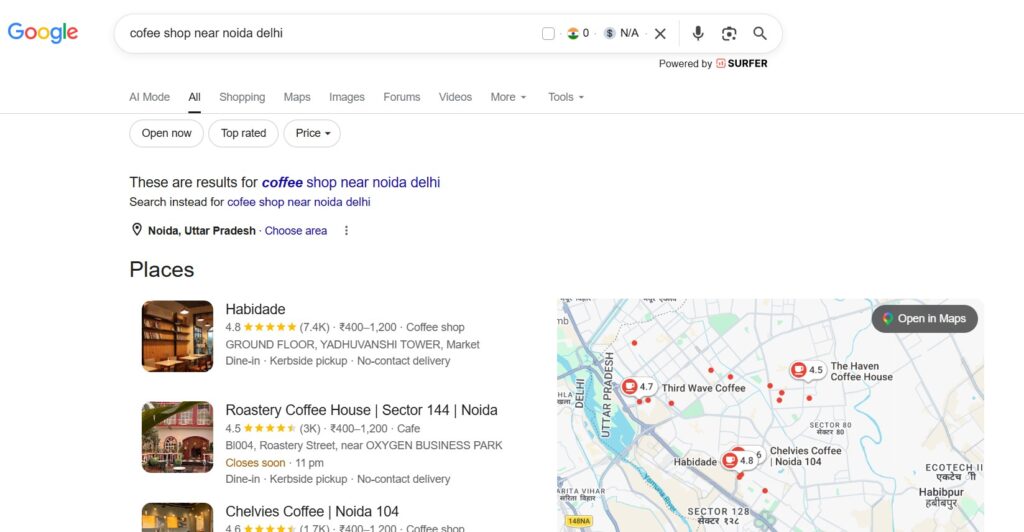
Google will deliver search results based on a business’s proximity to the searcher. If a business is located in Noida, and the user is in Noida, and searches for a coffee shop, then Google will pinpoint the shop. This is irrespective of the fact that there are higher-rated coffee shops in other areas of Uttar Pradesh. The ranking factor is out of your control, but you can still optimize it by adding your service area to your Google Business profile.
Optimize Your Website To Rank Well on Google Search Rankings
Google has a major market share of 91.27% compared to other search engines. This is why it is important to optimize the web pages and website as per their ranking factors. However, SEO is a marathon that requires you to constantly stay in the loop. This is because Google algorithms constantly evolve; you need to be ready to make changes.
Start implementing these ranking factors to stay ahead of the competition and rank well on the SERPs. Even small changes in the content and page specifications can leave a mark on your ranking. Struggling to get visibility or organic traffic to your website? Then you need an expert who can help you scale your website. Look no further; get in touch with me, and I’ll create a comprehensive plan to help rank your website and attain organic traffic.
2 Responses
[…] or website owner, you need to know these common SEO mistakes. That is why it is important to optimize Google’s ranking factors for best results. Let’s look at some common SEO mistakes and how you can fix […]
[…] has been the major goal of SEO specialists and marketers. They’ve been doing this for years by optimizing Google’s ranking factors. However, that’s become less important than it used to be. Today, businesses should focus on […]