In today’s digital era, businesses need a strong online presence to beat the competition. Website SEO is a critical factor in digital success in today’s crowded digital space. A small misstep can have a major impact on your rankings.
Over 68% of internet traffic is driven by search engines, with Google accounting for most of it. Google uses over 200+ ranking SEO factors to rank websites on the internet. It is hard to cover all these factors to get on the first page every time. However, you need to implement some important ranking SEO factors to perform well on SERPs.
There are some common SEO mistakes that users make unintentionally that impact their website rankings. So, whether you’re an SEO consultant, developer, or website owner, you need to know these common SEO mistakes. That is why it is important to optimize Google’s ranking factors for best results. Let’s look at some common SEO mistakes and how you can fix them.
1. Low-Quality Content
Content quality is a key factor that search engines and AI tools use to rank content. If they discover that your content is copied, not authoritative, or doesn’t meet user intent, they may not rank the page well.
Additionally, users will also leave your site quickly if they don’t find its content informational. In contrast, high-quality content not only improves visibility, but also attracts quality backlinks, bolstering your off-page SEO efforts.
Low-quality content usually includes
- Thin content that doesn’t fulfill user intent
- Outdated content
- Misinformation
- Copied content without any original value
- Grammatical, spelling errors, or poor formatting
- Unedited AI text
How to Fix Low-Quality Content
A few ways to fix low-quality content are by
- Producing high-quality content, which is accurate and relevant to the user. One of the best ways to do that is to follow Google’s E-E-A-T framework. Try implementing it in your content to rank well on SERPs.
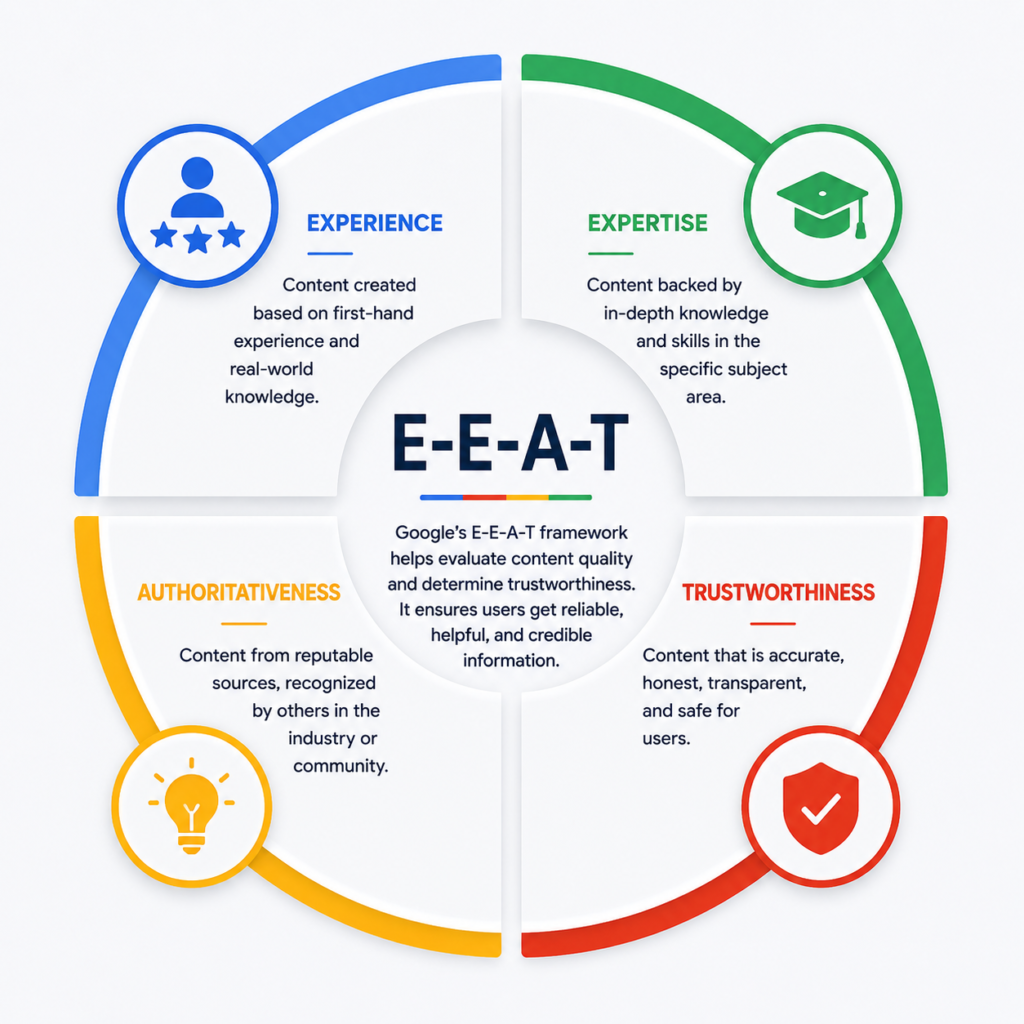
- Include original research or firsthand expertise in the content.
- Add sources from original reports or experts to give your content credibility.
- Use clear formatting with short paragraphs, bullet points, and headings to improve readability.
- Add author bios to highlight relevant credibility and expertise.
- Provide up-to-date content with statistics, facts, or examples reflecting current information.
Crafting high-quality content requires more than just words; it requires a strategy that balances user intent with search engine logic. I’ve spent 6+ years helping industry leaders scale their business; I know exactly what it takes to create content that converts. Ready to scale your digital presence? Let’s work together to create content that ranks and resonates.
2. Duplicate Content
Duplicate content is any identical or similar text appearing on one or more pages. Additionally, the same website may have two or more pages with the identical content. This may affect your rankings, and the wrong page may be prioritized to rank on SERPs.
How to Fix Duplicate Content
The possible solutions to tackle duplicate content include:
- Creating unique content on the duplicate pages on your website.
- Adding canonical tags to duplicate pages, redirecting them to the main page.
- Use 301 redirects from the duplicate page to the original one if you don’t want the duplicate version.
- Use nonindex tags to block the pages from ranking.
- Merge duplicate pages into a strong page.
3. Focusing Primarily on Keywords
Keywords were the blood and soul of SEO in the past. Users used to overuse and unnaturally place keywords to manipulate search engines and rank higher. Today, search engines work by understanding the intent of the query.
This is where semantic SEO comes in. It is an advanced SEO technique that focuses on understanding the intent of the search query. Now, you don’t need to target specific keywords to rank; you need to explain the entire content as a whole. It is an important SEO evolution that you need to adapt in today’s digital landscape.
How to Fix Overreliance on Keywords
- Use a combination of semantic SEO and keyword SEO for better rankings.
- Target multiple keywords that fulfill more than one search query.
- Naturally place target keywords in the page sections. This includes title, meta description, opening paragraph, alt text, and headers.
- Target long-term keywords to attract specific users.
Want to know the difference between the two SEO techniques? Check out my review on Semantic SEO vs Keyword SEO.
4. Keyword Cannibalization
Keyword cannibalization occurs when two or more pages on your website are targeting the same keyword. This happens when you have duplicate or similar content, which may hurt the rankings of one or both of these pages. In some cases, it can be caused by subcategory pages that are not different from the parent pages.
How to Fix Keyword Cannibalization
- Create unique pages that serve a distinct purpose.
- Identify pages that are competing for the same keyword.
- Use SEO tools like SurferSEO, which uses its Topical Map generator to craft personalised topics and prevent overlapping subtopics. You can get a cannibalization report by exporting your topics or cross-referencing Google Search Console metrics. This will help spot multiple URLs ranking for identical terms.
5. Under-Optimized Meta Tags
Meta tags help search engines understand the website’s context. Under-optimized meta tags are a missed opportunity to improve your website performance. Meta description and title tags are two common meta tags that help your website rank.
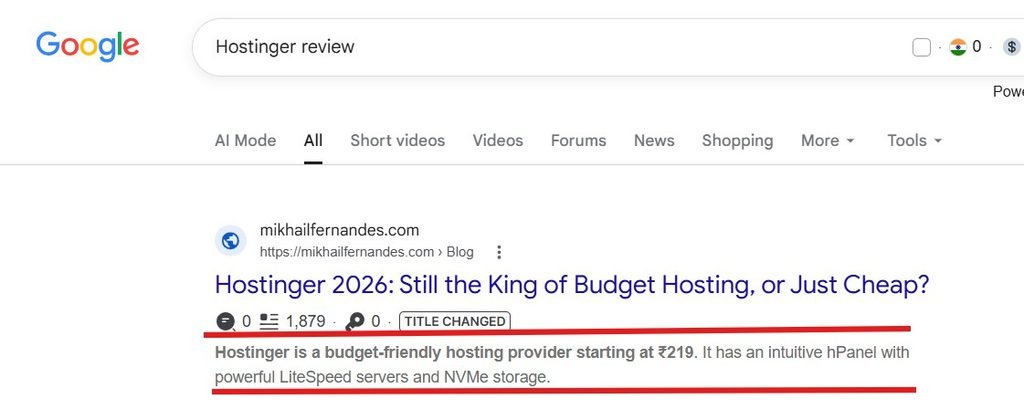
Some common reasons for under-optimized meta tags are:
- Duplicate tags
- Long or short meta tags
- Missing tags
- Keyword stuffing
How to Fix Under-Optimized Meta Tags
To resolve common meta tag issues, you can:
- Create unique titles for each page.
- Use keywords in the descriptions.
- Efficiently summarize the meta tags to explain what a user can expect from the page.
- Stick to 50-60 characters for title tags and 105 characters for meta descriptions.
- Avoid duplicate meta descriptions.
6. Ignoring Technical Issues
Technical issues have a grave impact on your website performance. It can impact how search engines scan and index your website. So, even if your website content is great, search engines will not rank it due to technical errors. In fact, it may also deter user engagement. As per a report, 53% of visitors abandon a page if it takes longer than 3 seconds to load due to technical problems.
Some common technical SEO issues encountered on a site include:
- Slow load times.
- Website not mobile-friendly or optimized for other devices.
- Broken Pages.
How to Fix Technical Issues
- Fix slow load times by reducing bloated images, videos, and visual elements. Optimize your HTML code and enable browser caching. Additionally, you can move to a different hosting service if the problem is coming from your web server.
- Try to create a responsive website design that loads on different screens.
- Ensure that you avoid intrusive pop-ups and that site buttons are easy to tap across different devices.
- Fix broken pages by reinstating the page or redirecting to a relevant page on your site. Additionally, fix broken links in your content.
- Check for crawling errors if search engines struggle to index your pages.
7. Visual Issues
Images, videos, GIFs, or other visual elements can make or break a website. While the right visuals can improve your reach, large files can slow down website speed. This will impact your ranking on SERPs.
Common SEO visual issues include:
- Oversized files
- Missing Alt text
- Broken images
- Poor thumbnail choices
- Hidden video player
- Missing video schema
How to Fix Visual Issues
5 common ways to fix visual issues are by
- Adding alt text to each image in WordPress or other content management systems.
- Fix or replace broken images.
- Upload high-quality thumbnails with high resolution.
- Add video schema and explicitly describe the video.
- Compress or resize visuals to load faster without compromising quality.
8. Poor Crawlability
Crawling is a core part of how search engines work to scan and index your website. If your website has poor crawlability, search engines will struggle to access it and show it on SERPs.
Internal links are a key factor for crawlability because search engines show how pages relate to each other. Common issues that cause poor crawlability are broken links, robots.txt files, or redirect loops.
How to Fix Poor Crawlability
To fix the poor crawlability issues:
- Add relevant internal links, but avoid overlinking as it may confuse visitors.
- Fix broken links and nofollow links.
- Improve website infrastructure so search engine bots can easily crawl your website.
- Check if the robots.txt file blocks pages.
- Resolve page errors and redirect loops.
9. Thinking AI Search Optimization and SEO are the Same
SEO techniques are critical to rank on SERPs, but they may also hurt your chances of appearing in AI-generated answers. Answer engine optimization (AEO) and SEO have several overlapping practices, but may lack in others. AEO mainly focuses on delivering crisp answers and getting your brand cited on AI engines.
How to Fix AI Search Optimization
- Write short paragraphs and try to directly answer questions from the heading.
- Consistently name your brand, tools, or areas of expertise.
- Optimize your website for conversational AI queries.
- Build a positive reputation through online forums and testimonials.
- Craft detailed FAQ sections.
10. Neglecting Local SEO
Local SEO is very important for businesses to appear in local search results. Several websites and businesses fail to optimize it, which impacts their local presence. It is very important as people perform local searches when they’re ready to buy.
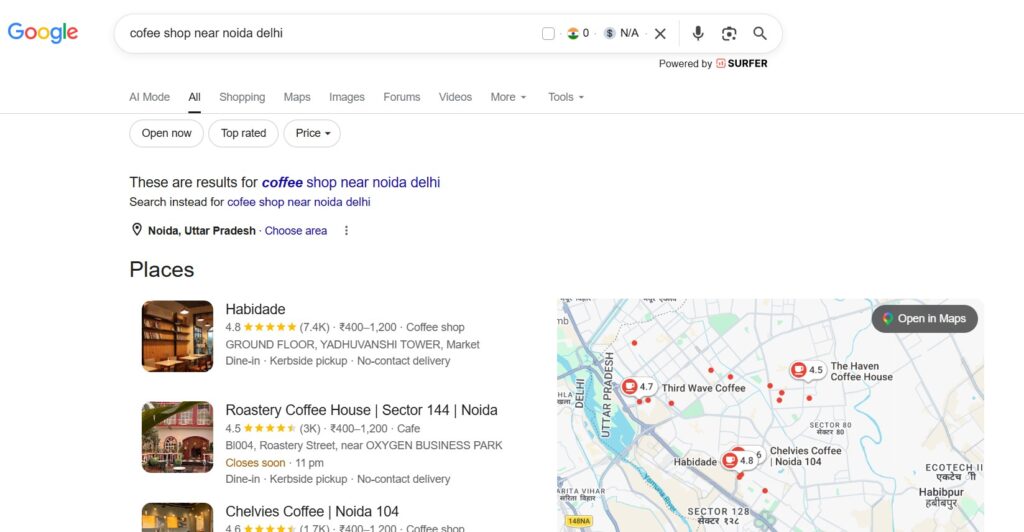
How to Fix Local SEO
- Optimize your Google Business Profile and add your business to other directories.
- Accurately add your business name, address, and phone number with complete business hours.
- Add high-quality photos of your business.
- Include city or regional keywords in your content and meta descriptions.
- Optimize your website for Near Me searches.
- Ask customers to leave reviews on your business profile.
11. Not Building Backlinks
Backlinks are a crucial element of your off-page SEO efforts. Earning these backlinks is tough and complicated; however, they are very important. These backlinks help build authority and recognition with search engines. This invariably allows you to rank well on SERPs.
How to Build Backlinks
- Reach out to reputable platforms and ask for backlinks.
- Find broken or missing links and ask websites to link to your website if you have a similar topic.
- Use guest posting to get your links on authoritative websites.
- Avoid buying backlinks from irrelevant sites.
- Monitor backlinks and remove harmful links.
12. Not Tracking Website Performance
Tracking website performance is crucial to identify what is working and what needs improvement. If you don’t track your website performance, you may be wasting time and resources that won’t improve your website.
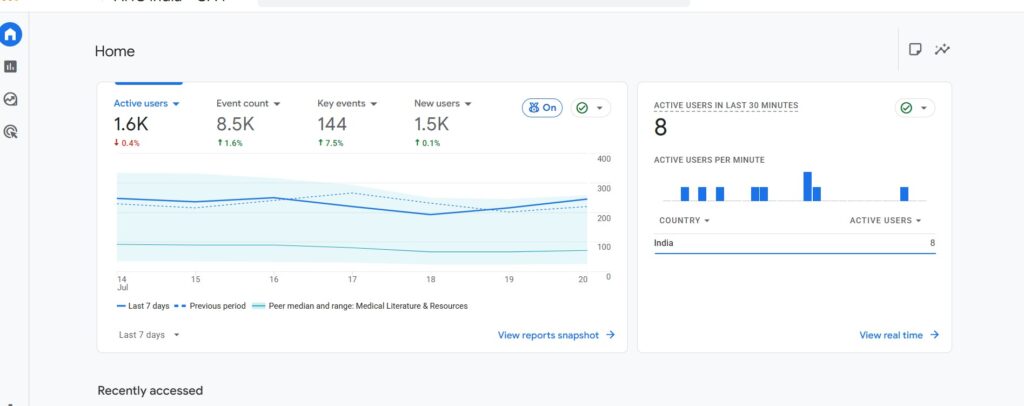
How to Track Website Performance
- Use tools like Google Analytics and Google Search Console to monitor your website performance.
- Keep an eye on key metrics and implement ways to fix them.
- Connect your website to SurferSEO to get better insights into your website performance and standing.
Avoid Common SEO Mistakes and Improve Your Website Performance
SEO is an ever-evolving strategy requiring constant checks and refinements to get the best results. Avoiding the common SEO mistakes described in the article is important, but they can be easily resolved if they are present. However, real progress is attained by constantly adapting and improving with algorithm shifts.
When you actively address the pitfalls, you’re not only optimizing for search engines, but also improving user experience. However, tend to one issue at a time and track metrics to remain well-versed in the digital ecosystem. Small changes can lead to exponential growth in rankings and traffic with time.



One response
[…] find nearby businesses. Google Business Profile plays a critical role in local visibility. It is a common SEO mistake most local businesses miss or consider […]