Off-page SEO is one of the most difficult parts of your digital marketing journey. It covers all the tasks that you perform outside your website to build trust and authority. However, there are more ways to get it wrong than right. While some approaches may work, others may take more time and resources, and still not deliver the best value.
Traditionally, off-page SEO meant acquiring links, as they are an important ranking factor. However, only 94% of blog posts receive external links, and only 2.2% get links from multiple websites. Google has no documentation on implementing off-page SEO, aside from things to avoid. If you approach it with clear insight, you can craft a reliable off-page SEO strategy and receive more visibility.
What is Off-Page SEO?
Off-page SEO is a powerful strategy that involves making changes outside your website to increase your rankings. It relies on implementing strategies to influence how people find or engage with your content.
Off-page SEO helps build your website’s authority online. When you get a link or a review from others, it is a sign to search engines that your website is reputable. This plays a key role in increasing visibility in search results.
Some common practices for off-page SEO include implementing link building, guest posting, social marketing, etc. Off-page SEO is complicated but is important for SEO success in the digital space.
Off-Page SEO vs On-Page SEO
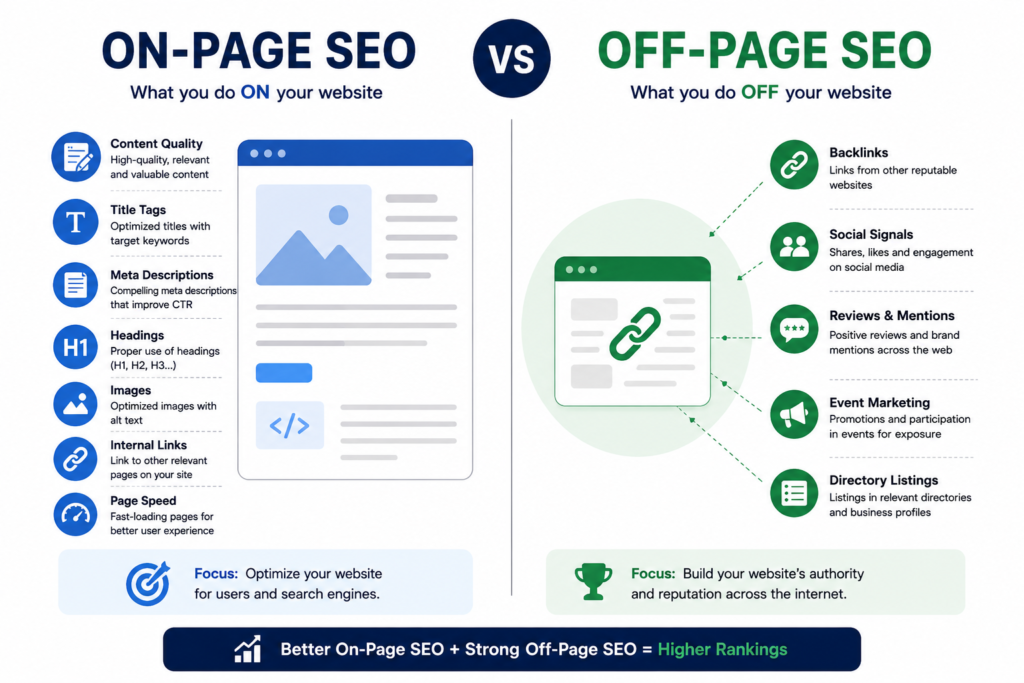
Off-page and On-page SEO are two critical elements of a comprehensive SEO strategy. While on-page SEO is designed to optimize a website’s content, off-page SEO helps build reputation and visibility on the internet.
On-Page SEO involves optimizing keywords, internal links, meta tags, content quality, and visual optimization. This allows search engines to crawl your page and understand your content, improving your rankings.
Off-Page SEO aims to build authority by achieving links from highly authoritative websites or gaining mentions. It may also involve getting citations and using social media channels to improve your presence.
Top Off-Page SEO Techniques That Work
Off-page SEO strategies go beyond your website to build credibility and improve rankings. Let’s look into 5 off-page SEO strategies to boost your presence on SERPs.
1. Link Building
Link building is a key part of an off-page SEO strategy to improve your website authority and search rankings. However, over 41% of SEO experts consider it one of the most difficult parts of SEO. It is a process where you get other sites to link to your site. These backlinks help you gain trust and authority from Google or search engines.
Some of the most important off-page SEO metrics for good backlinks include:
- Page authority score: The authority score of each page
- Number of backlinks: Total number of backlinks pointing to a domain or a particular page.
- No of referring domains: Number of domains linking to a page
- No of referring IPs: Number of IP addresses that link to a domain or a page.
Let’s look into some link-building techniques to help your off-page SEO strategy.
A) Broken Link Building
Broken link building is a complex process that involves finding relevant backlinks that are not working. Once you find them, you can convince these site owners to update their pages with links to your site. This is a victory for the website owner as it helps them maintain their user experience, while you earn a quality backlink.
You can implement the strategy effectively by
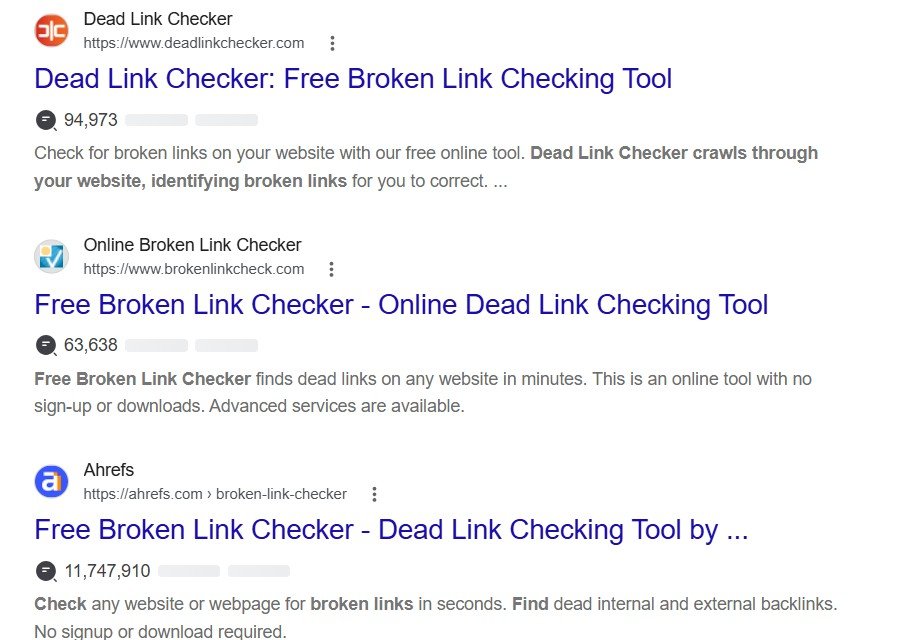
- Using tools like Semrush or free broken link checkers on Google.
- Contact the website owner and request them to add your link.
- Ensure that your content provides value that fits the existing page.
B) Unlinked Brand Mentions
Unlinked brand mentions are a text reference to your brand on a website, without a link to your domain. These links help build brand awareness and are excellent for semantic search or AI visibility. However, if there is a link on the same content, it won’t cause anybody any harm. You can request the website owner to add your website link to the content.
To improve brand mentions, you can
- Monitor mentions through Google Alerts
- Build relationships with bloggers and influencers
- Reach out to sites that mention your name and request a link
C) Journalist Requests
Journalists require expert content and perspective for their articles. You can check websites like Help a Reporter Out (HARO) to connect with credible sources. Connecting to these reporters can help you get quality backlinks from publications or news websites.
Try to
- Provide expert and well-researched answers
- Build long-term relationships with the media outlets
- Be responsive and try to work on deadlines set by the journalists
D) Digital PR
Digital PR uses PR techniques to gain high-quality backlinks. The technique is a top choice for SEO experts as it offers an opportunity to earn multiple links. A great campaign can increase brand awareness and put you in front of your target audience.
2. Content Marketing
Content marketing is a crucial part of off-page SEO. Publishing high-quality content is critical to attracting and earning backlinks. Let’s look into the most effective content marketing off-page SEO tactics.
A) Guest Posting
Guest posting allows you to share your content and expertise to a new audience. It is a great way to build links and authority from high-authority websites. If you do it properly, it helps build relationships and drive referral traffic.
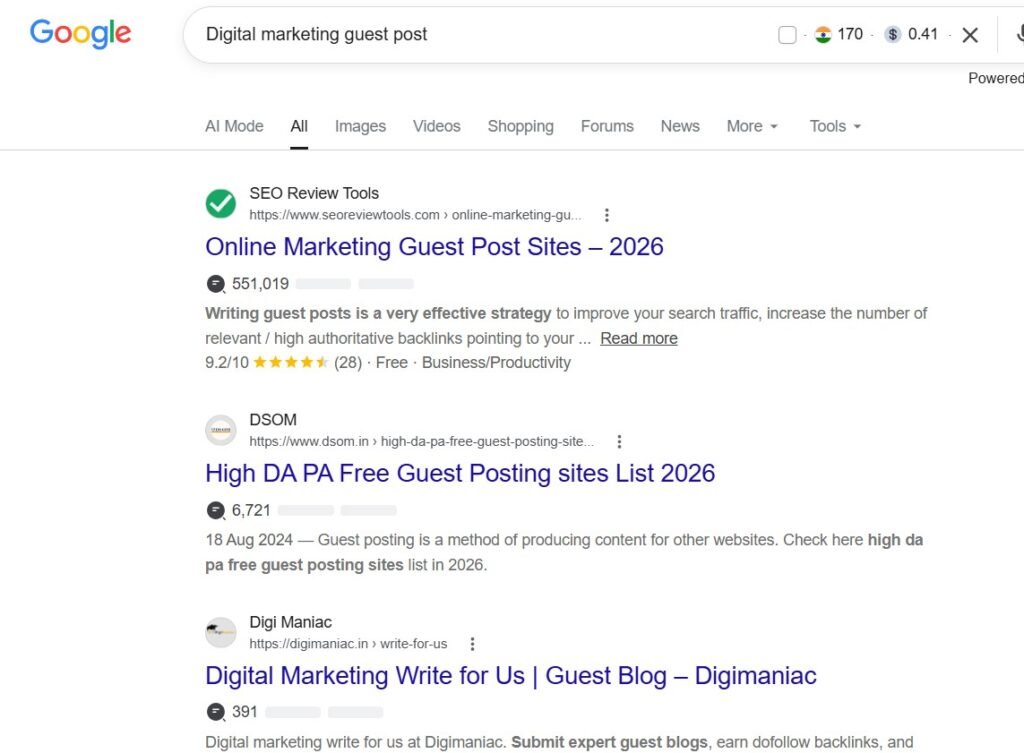
You can search for guest posting opportunities for sites in your niche through Google’s search operators. The special characters and commands can be
- Digital marketing guest post
- Digital marketing write for us
- Guest posting opportunities for digital marketing
When you are choosing a guest posting website, ensure it aligns with your brand’s values and audience. Try to craft informative and engaging content that resonates with the host’s market. This will help increase your visibility and credibility.
B) Social Media
Social media is an ever-present itinerary in todays digital sphere. While it doesn’t improve your Google ranking, it attracts more traffic and links. Even if your site doesn’t get immediate traffic, it will make people aware of your page. This can lead to more branded search and mentions with time, which is great for your off-page SEO efforts.
C) Podcasts
Podcasts have become very popular amongst viewers in recent years. Putting your ideas forward and sharing your expertise can help earn valuable brand mentions and backlinks. These podcasts reach new or engaged audiences, helping you drive traffic and increase visibility for your website.
For better impact, you should collaborate with experts to increase your credibility. Try to promote these sessions on your social channels to attract larger audiences. Additionally, you can use clips of these podcasts in your blog posts or post infographics.
D) Influencer Marketing
Influencer marketing uses influencers in your industry to promote your brand to their audience. You can tap into an already existing audience and gain brand mentions as well as backlinks from their channels.
Similar to podcasts, choose influencers who are leaders in their space and have an engaged audience. Ask influencers to review your products, write blog posts, or create video testimonials. Try to use these endorsements to build trust and organic reach.
E) Forums
Online forums allow you to be authoritative and drive traffic to your website. It doesn’t really help you rank on Google, but it allows you to share your expertise with new audiences.
Reddit and Quora are two popular platforms where you can share your thoughts with readers. These platforms offer a fantastic way to build relationships and trust. However, it is essential to engage with the community consistently.
F) Content Syndication
Content syndication republishes existing content across one or more platforms. This allows you to expand your reach, build awareness, and generate leads. Some platforms like to syndicate content as it is better than creating fresh content every time. Popular platforms that syndicate content include Medium, LinkedIn, Outbrain, Taboola, QUU, etc.
Google shows the version that is appropriate for users, so your version may not be preferred. To prevent this, ensure that the syndicated piece links to the original article. Ensure you configure canonical tags, where you need to add an HTML code to your website to show the main version.
G) Content Repurposing
Repurposing your content allows you to expand your website content across different channels. You can repurpose content by
- Turning blog posts into Social media infographics
- Blogs posts into YouTube videos
- Create podcast episodes
- Creating infographics or slideshows for LinkedIn.
3. Local SEO
Local SEO aims to optimize your website visibility and business in the local area. This is very important for businesses that rely on local customers for their growth. It includes restaurants, delivery services, service providers, and retail stores.
A) Google Business Profile
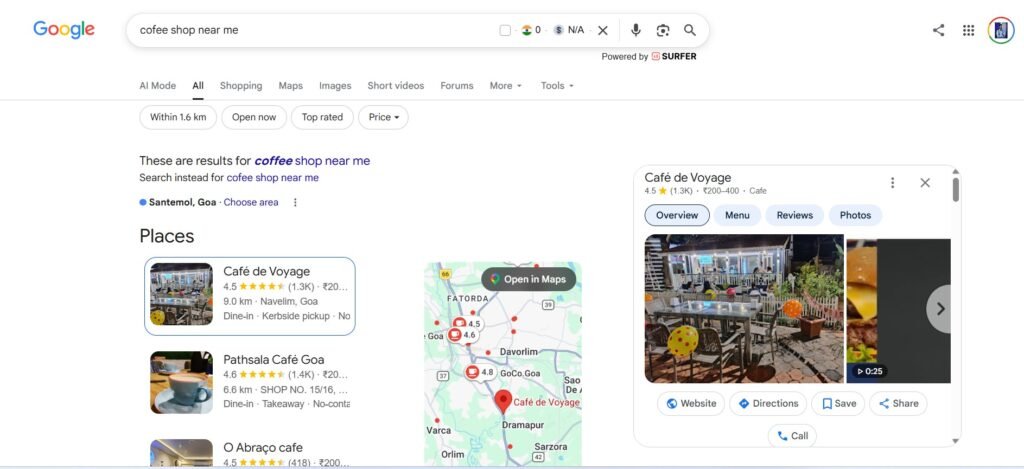
Google Business Profile (GBP) is a crucial business listing tool that determines how your business shows up on Google. This is why it is important to optimize GBP for better off-page SEO tactics. It is a critical ranking factor, and it is essential to optimize this Google ranking factor to improve rankings on SERPs.
The best steps for GBP are:
- Keep business details updated and accurate
- Post high-quality images of your business
- Add relevant business categories to improve visibility
- Create an in-depth business description and add keywords to improve its search relevance
B) Citations
Use NAP SEO to cite your business name, phone number, and address across numerous directories on the internet. Consistent citations ensure your business is legitimate and improve your local rankings.
Best practices to build citations include:
- List your business in relevant directories, including Google, Apple Maps, Yelp, blog sites, etc.
- Ensure the details are consistent across all platforms
4. Reviews
Customer reviews or testimonials help build trust in your business. Google evaluates and ranks a website better if it has reviews, enhancing your site’s reputation. Positive ratings improve your visibility on the internet.
The best strategies for reviews:
- Ask satisfied customers to leave reviews
- Respond to positive as well as negative reviews
- Use positive reviews as a marketing tool
5. Event Marketing
Event marketing is a great strategy to create buzz and promote your business. This can amplify your off-page SEO efforts, drive traffic, and improve your social engagement. This may include public speaking, partnerships with organizations in your niche, and getting awards.
Is Off-Page SEO Worth It?
Off-page SEO is a complex strategy as you have to focus on external factors to rank. Unlike on-page and technical SEO, off-page SEO focuses on making changes outside your website. However, it is not limited to backlinks and involves numerous strategies to rank well on SERPs. Consistently implementing these strategies is necessary to rank in the competitive landscape.
The external factors are challenging and can overwhelm website owners; however, they are important for long-term success. If you are able to portray your website as a leader in your niche, you’ll have authority for years.
Want to be a thought leader in your niche? Look no further; get in touch with me. I’ll help you craft link-worthy content for your website. Additionally, with my years of experience, I can connect you with top websites and get you valuable links.
2 Responses
[…] Improve off-page SEO […]
[…] backlinks are useful, but businesses shouldn’t limit themselves to traditional off-page SEO practices to collect backlinks. Businesses should focus on earning links through original content […]