Search engines are the heart of search on the internet. These search engines have heaps of information in their database, which they display to answer user queries in milliseconds. There are millions of websites on the internet, so providing the right pages to meet user intent is determined by complex algorithms.
There are numerous search engines, amongst which Google has 91.27% market share, with Bing having 4.68%, followed by Yahoo at 1.28%. These search engines send their crawlers to scan web pages and index them, followed by ranking them. During this process, they check numerous qualities and ranking factors of webpages to determine which are relevant to user queries. In this article, I’ll break down the key intricacies of how search engines work and rank webpages in search results.
What is a Search Engine?
A search engine is a software system designed to help users get information stored on the internet or a particular database. They break complex information down and answer queries instantly. The engines use a search index and algorithms to find the best pages to meet user intent.
New AI-powered search engines have popped up recently, amongst which ChatGPT and Perplexity Search are two frontrunners. They are different from traditional search engines as they use large language models to provide direct answers to user queries. However, AI search engines have lower market share than traditional search engines. As of Q2 of 2026, Google search has 5.3 billion users, with ChatGPT accumulating 1 billion active users.
How Do Search Engines Work?
Search engines don’t perform real-time searches when you search for a query. They follow a three-step process that helps them organize and rank webpages into their searchable database. Let’s understand these three steps below.
1. Crawling: Search Engines Find Your Pages
Crawling is the process by which search engines work to find web pages. Search engines send their web crawlers/bots/robots to read web pages and review content for new pages or updated content. Google’s Googlebot is the most popular crawler on the internet.
The web crawlers start with known webpages and follow links in the page to discover new content. It is therefore important to have strong internal links to guide them to different pages on your site. The crawlers work 24/7 to discover new pages or find any changes in existing ones, mapping your pages. They download the content they are crawling, and it is given to search engines to analyze and expedite the indexation process.
Search engines have their own algorithm to determine how your web page is crawled. However, you can set additional signals to tell search engines to crawl important pages first. This includes:
- Robots.txt: The Robots.txt file sets certain rules on which pages are allowed to be crawled and which to ignore. It sets a user agent that assigns specific bots that have access to files.
- Sitemaps: A sitemap helps crawlers identify where pages are located on the site. It dictates how the pages are organized and which pages should be crawled more often. These sitemaps improve the visibility of your pages and enhance your website’s SEO performance.
- Redirects: Redirects let crawlers know that pages are moved to a new location. This is important if you change the URL of a page or remove it, as the original URL doesn’t disappear from the internet. A redirect lets you direct the crawler to recognize a new page in its place.
2. Indexing: Store Page Content in the Search Database
Once a crawler discovers the page, the search engine will begin its indexation process. In this process, the crawlers will store important details of each page in their searchable database. During this process, search engines check:
- The main topic of the webpage
- Type of content included in the page
- Structure of the content
- Keywords and related phrases targeted in the content
- What is the correlation of the webpage with your website content
You can tell search engines to index your website using key tools and methods.
- By submitting the sitemaps and requesting manual page indexing via Google Search Console.
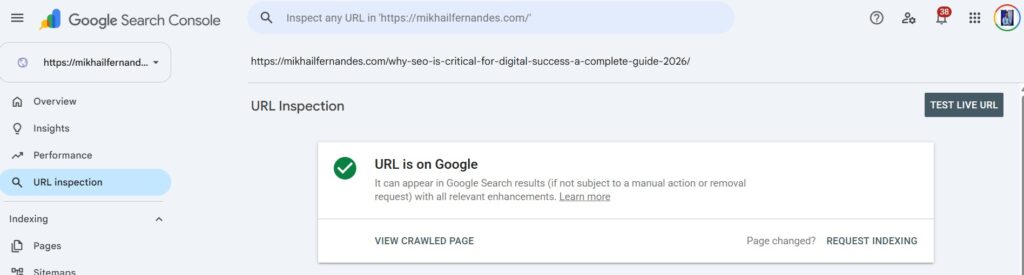
- Placing noindex tags on private or duplicate pages to keep them away from indexing.
- Using a robots.txt file to guide crawlers to direct which folders to skip.
- Using schema markup to direct search engines to interpret page data in the system.
Search engines crawl through numerous pages, but not all get indexed. Pages may be skipped if they have duplicate content or are blocked by noindex tags. Additionally, if Google thinks that a page doesn’t provide value, it will not index the page.
3. Ranking: Shows Pages in the Best Order
Ranking is the order in which search engines work to serve results to users. Search engines have a database of content suited for different search intents. When you type a query, the search engine will scan its index for the most relevant pages. Within a few milliseconds, the search engine determines which pages best match the query and displays them.
How Search Engines Rank Pages
Search engines have a complex algorithm that determines the ranking factors. Google has over 200 ranking factors, but you need to refine your pages for aspects that will yield better results. If you want to rank on Google or other search engines, some important ranking factors include:
- Content Quality: Content is something that makes or breaks your ranking. Google promotes unique content that stands out. In fact, fresh content or updated content ranks better, especially for trending topics. Most importantly, search engines prefer content that meets user intent.
- Loading Speed: A website that loads quickly and is easy to navigate is a major ranking factor.
- Backlinks: Backlinks are authoritative indicators to search engines that your content is trustworthy and linkable.
- On-Page Optimization: Using keywords in key areas of your page helps search engines understand the intent of the page. Effective areas you can add keywords include the title tag, URL slug, heading 1, body text, and meta description.
- Mobile-Friendliness: Most searches today happen on mobile devices, so search algorithms prefer mobile-friendly pages.
- Website Structure: Keep your website structure simple and limit the number of subdirectories. This will help search engines crawl and index faster.
All these ranking factors play a pivotal role in SEO Optimization for pages to do well in the digital space.
Start Optimizing Your Website to Rank on Search Engines
Search engines are a huge resource if you want to grow website traffic and increase your sales. These engines crawl, index, and rank pages based on set algorithms. This is why it is important to understand how their algorithms work. Optimizing your pages for relevant search can give you visibility and get more organic traffic. This is the basic foundation of SEO. Apart from this, off-page and technical SEO optimization can help your website rank better.
Content is the core of optimization, and quality content is something that ranks on the internet. However, in all this algorithm facade, we forget about our core customers. You need to create content that resonates with your customers and ranks. Check out my article on How to Write a Blog Post that Drives Organic Traffic to get more insights on crafting unique and insightful content.
Are you a small business owner or a marketer looking to dive into the massive opportunity of SEO to rank your website? Look no further; get in touch with me, and I’ll help craft a specialized plan to elevate your Google search rankings.



2 Responses
[…] is a core part of how search engines work to scan and index your website. If your website has poor crawlability, search engines will struggle […]
[…] harder and more complicated. In this article, I’ll cover ways you can earn more visibility from traditional search engines and AI answer systems heading into […]