SEO experts have long relied on keywords to improve their website’s SEO performance. However, in recent times, semantic SEO has emerged as a critical ranking factor for Google and other search engines. Today, search engines prioritize content relevancy and intent rather than specific keywords.
Keywords are still important, but they’re not the only major SEO parameter that matters. In fact, keywords have a 55% importance rating according to a report. However, content relevance is a dominant signal with a 92% importance rating.
In this blog, I’ll break down the differences between semantic SEO vs keyword SEO and reveal which strategy is best for SEO success.
What is Semantic SEO?
Semantic SEO is an advanced SEO strategy that aims to craft content that understands the intent and meaning of search queries. It focuses on content that helps clarify the concept rather than on matching keywords alone.
Search engines have become advanced and have greater processing power. For example, if you search for “broken laptop screen” on Google. A semantic search engine will consider synonyms and related terms, such as how to fix a laptop screen, ways to fix a laptop screen yourself, etc.
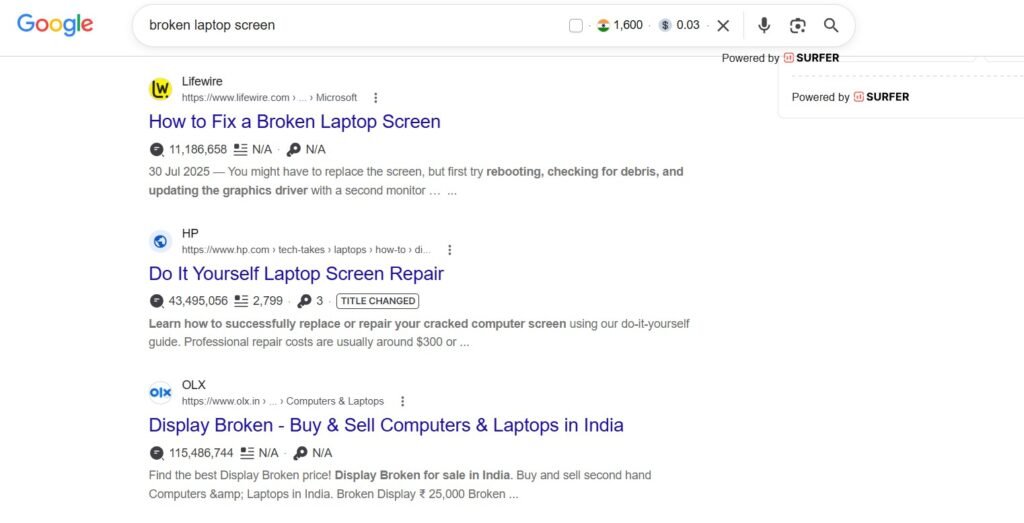
Semantic SEO is flexible, understands users’ intent, and delivers relevant results. This is a major shift in determining how search engines work today.
Key Components of Semantic SEO
Semantic SEO focuses on optimizing your content around topics, concepts, and entities. The key components include:
1. Target Audience Optimization
Modern search engines operate as real-world entity indexers rather than text matchers. You need to understand people, places, or concepts to get the best results. Connecting your website to these indexers helps you reach your target audience.
2. Keyword Research and SERP Analysis
Keyword research is very important even in semantic SEO; however, you don’t have to be limited to a single primary keyword. Try to use multiple keywords that tie the topic and related concepts together. This helps create comprehensive content from various angles.
Analyze the results pages of Google and other search engines and see what is ranking for your targeted topics or keywords. This will help you create what content is ranking and what you need to create to compete.
3. Content Architecture and Topic Clusters
Semantic SEO relies on building topical authority. Try to follow a set structure as listed below.
- Pillar-Cluster Content: Try to create a parent topic page, which is supported by other articles. These articles tell the entire story of a certain topic and its sub-aspects.
- Internal Linking: Link the internal clusters of the pillar page, so that search engines understand their interlinkability.
- Topical Depth and Completeness: When you cover the main questions and write about related topics, you will build topical authority in the space.
4. Search Intent and Contextual NLP Alignment
Search engines evaluate text based on the intent of the text and assess how it will answer a query. Try to cover content that satisfies the primary intent, but also provide secondary information. This will make it into multi-intent coverage content, offering you better ranking possibilities.
5. Structured and Linked Data
Structured data refers to translating complex natural language into a readable format for search engines. Using codes like JSON-LD can help search engines identify which real-world entity a page covers.
6. High-Quality Scannable Content
Quality content is the most important part of semantic SEO. Make sure your content provides in-depth, clear information that thoroughly answers user queries about a topic. Try to implement Google’s E-E-A-T guidelines to get better results.
Semantic SEO focuses heavily on the structure of the content. It is important to use set headings for each section to clarify the relationship among your ideas. Ensure you place concise answers at the beginning of the section, offering direct answers.
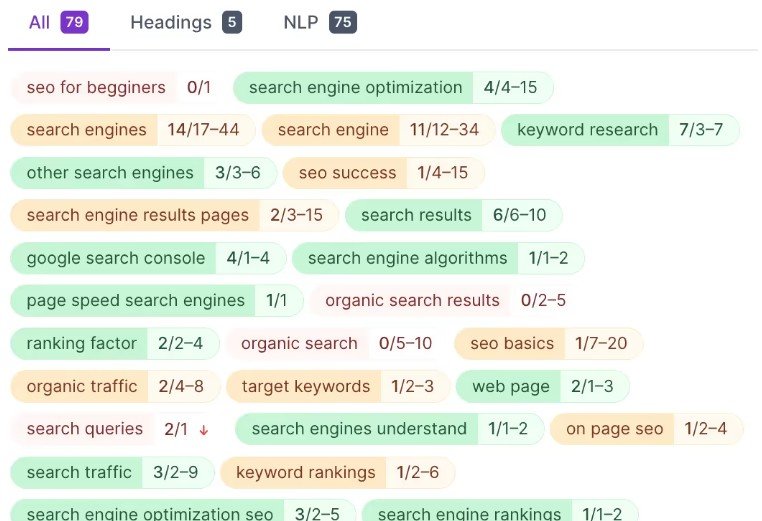
Semantic SEO may look complex; however, with the right help, it can be made simple. This is where SurferSEO comes in. The platform helps analyze top-ranking pages for your target keyword and generates contextually related terms and NLP entities. This helps comprehensively cover the subject. Additionally, it has a content score feature determining how well your concepts will perform.
How Does Semantic Search Work?
Semantic search works following simple steps and is powered by sophisticated technology. Let’s understand it better below.
- User Intent: A semantic search begins with the search engine figuring out what the user wants from their query. This will involve analyzing the search query, past search history, and other signals.
- Knowledge Base: Search engines have a massive database that will help search engines understand the connection with the concepts.
- Contextual Signals: Search engines will understand the user’s location, device, and search history. This will help them better personalize the results and deliver relevant information.
- Delivering Results: It will then rank the best results that match your search queries’ meaning and intent.
What is Keyword SEO?
Keyword SEO focuses on targeting specific keywords that people search for. Traditionally, SEO revolved around it, and the primary goal was to insert high-ranking keywords in content. This allowed websites to rank and perform well for the specific keywords. Search engines were also basic, and when a user typed a certain query, they looked for pages that contained the exact keywords.
The approach worked well for a long time; however, now it has its limitations. When users focused specifically on keywords, it didn’t consider the full context of the search intent. Today, search engines have become more sophisticated, and it is not the only source of ranking anymore.
Key Components of Keyword SEO?
Keyword SEO is the foundational basis of identifying intent, index, and on-page relevance of content on the internet. Its key components include:
1. Keyword Research
Keyword research is the first stage in which users identify what the target audience searches. The viability of the keywords is determined based on their search volume, keyword difficulty, and cost per click. Additionally, they are classified into short-tail, mid-tail, or long-tail keywords based on the length of the keywords.
2. Search Intent Classification
Keyword search intent determines the specific purpose behind the user’s query. They are classified into informational, navigational, commercial, and transactional. Identifying the right keywords will help you deliver the best results to your readers.
3. On-Page Keyword Placement
The keywords have to be strategically placed in the content to get the best results. A few places to place keywords include:
- Title tag: Place the primary keyword in the heading, maintaining a natural look.
- Meta Description: Incorporate the primary and secondary keywords.
- Heading: The H2, H3, and other headings should contain primary, secondary, or long-tail keyword variations.
- URL Structure: Clean and hyphen-separated premalinks containing the target keyword.
- Introduction and Body: Naturally place the primary keyword in the introduction and distribute other keywords in the body.
- Image: Include descriptive images or alt text in the image files.
4. Keyword Mapping
Strategically map keywords with dedicated URLs to offer site-wide coverage. Ensure that every primary keyword targets one canonical URL. Remove or resolve scenarios where two or more internal pages compete for the same query. You can merge overlapping or low-performing pages through 301 redirects to build a robust authoritative asset.
5. Tracking and Gap Analysis
Monitor how your keywords are performing on a daily or weekly basis across various devices and locations. Find missing keywords that are untapped or missing from your repository. Additionally, update underperforming posts with in-depth coverage and fresh secondary keywords.
How Does Keyword Search Work?
Keyword search requires you to match keywords on your website to what people are searching for. Below is the breakdown of the process:
- Keyword Research and Optimization: Keyword search begins with search engines looking for specific keywords in the content. The search engine will look into the on-page SEO optimization of the terms to display results. However, it is important to place these keywords naturally and avoid stuffing.
- Off-Page Optimization: Keyword search also involves off-page SEO, where you perform activities outside the website. Search engines check website authority to determine whether a website appears in the SERPs. Try to add target keywords in the anchor text for better results.
- Crawling and Indexing: Search engines use crawlers to scan and discover new pages. If the content meets their standard, they will index it. The right keywords allow search engines to find the right page when a user enters a specific search query.
- Ranking: Search engines rank web pages based on numerous factors, including the relevance of keywords, authority of the website, or other technical SEO factors.
Semantic SEO vs Keyword SEO: What is the Difference
Now that I’ve covered semantic SEO vs keyword SEO in depth, let’s look at the direct comparison between them both.
| Feature | Semantic SEO | Keyword SEO |
| Focus | Using the intent behind the search query. | Exact keywords in the search query. |
| Query Flexibility | Understands the meaning, intent, and relationship with the search query. | Works with specific terms or words. |
| Keywords | Uses Latent Semantic Indexing (LSI) keywords based on related terms. | It is fixed to a set of primary keywords. |
| Content Depth | Create comprehensive content that addresses the core questions alongside related queries, addressing different angles of a topic | Target specific keywords, which can lead to thin content. |
| Goal | Understand every user’s unique needs and provide relevant results. | Match search query with relevant keywords. |
| Data Type Support | It supports text, images, audio, and other data. | It primarily supports text-based content. |
Semantic SEO vs Keyword SEO: Which is Better?
The best strategy for SEO is to combine both semantic SEO and keyword SEO. While semantic SEO may seem like a clear winner, keyword SEO is still important today. Keywords remain the foundation of SEO and the basis on which people search. You still have to know what keywords your audience is using to find the content.
Keyword SEO is designed to target specific keywords in search queries. Semantic SEO allows you to broaden the reach and rank for similar topics and concepts. When you combine both these strategies, you have a strong SEO strategy.
One response
[…] Want to know the difference between traditional and new SEO? Read my review on Semantic SEO vs Keyword SEO. […]