On-page SEO is a key parameter of SEO that helps optimize individual web pages to rank in search results. The strategy optimizes elements of your webpages, ranging from minimizing load times, improving readability, adding keywords, and more. A structured on-page SEO strategy helps search engines understand the content to create a seamless experience for users.
On-page SEO is quite vast, and it is common to skip some details. However, in this guide, I’ve created a 10-step checklist to help you understand the best practices to rank your web pages. Let’s delve in to know more.
What is On-Page SEO
On-page SEO is the foundation of your website, which optimizes it for search engine rankings. It aims to optimize individual pages to make them easy to navigate for both users and search engines. The process mainly involves improving the content and structure of webpages, enabling them to rank on search results and AI platforms. You have complete control over On-page SEO, unlike with Off-page SEO optimization.
On-page SEO is important as it is one of the key ranking factors of Google. It helps search engines and AI to understand the pages and match them to user queries. Furthermore, it improves user experience, allowing them to find the information they need.
Complete On-Page SEO Checklist
On-Page SEO has key elements that help rank web pages higher. It is essential to optimize this Google ranking factor to rank high on SERPs. Let’s look at them below.
1. Keyword Optimization
Keywords are a crucial element of on-page SEO that help search engines understand the page’s intent. Selecting the right keywords and strategically seeding them are essential SEO practices. Try to optimize these keywords and assign target keywords for each page or section to avoid overlapping.
When you are researching keywords, check these three parameters:
- Search volume: Average searches a term gets.
- Search intent: What is the description of the keyword to the user.
- Keyword difficulty: How hard it is to rank for the term on Google.
To perform keyword research, you can use numerous SEO tools; however, I would recommend SurferSEO. It is a powerful platform that provides comprehensive insights into a specific keyword’s competition, content structure, and more.
Once you perform your keyword research, you
- Place the main keyword in the first paragraph
- Naturally integrate the keywords into the content
- Use variations of the keyword
- Avoid keyword stuffing
- Use long-term keywords, as they provide 1.76x more clicks than single-word keywords.
2. Title Tags
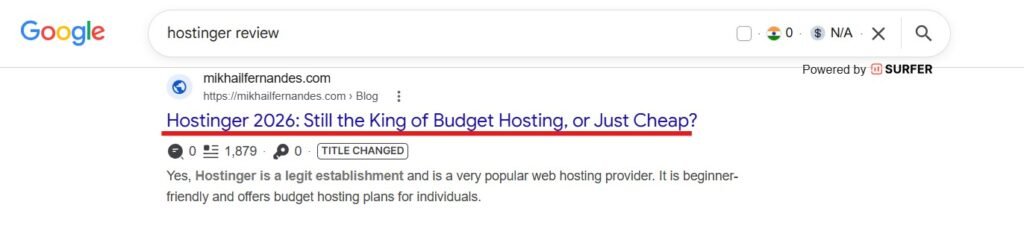
Title tags are the first title that users would see in search engine results. A keyword-rich title can boost clicks on the pages. Try to make the title tag clear and compelling.
The best practices for title tags include:
- Keep the title length between 50-60 characters.
- Place the primary keyword at the start of the title
- Make the title clear and descriptive to sum up the content
3. Header Tags
Header tags help provide structure to content pieces, allowing users and search engines to understand the context better. A page with clear headings not only improves reliability, but also SEO.
Each page should have an H1 tag; it is the heading that helps clearly describe the content. You need to support the H1 with H2 and H3 tags to explain the content.
To ensure your content is easily understood, you need to
- Include the primary keyword in the H1 tag, while you can insert secondary keywords in the H2 and H3 tags.
- Keep each section focused on the specific question.
- Offer direct answers to each section.
- Use bullet points or a numbered list to offer scanability.
4. Meta Description
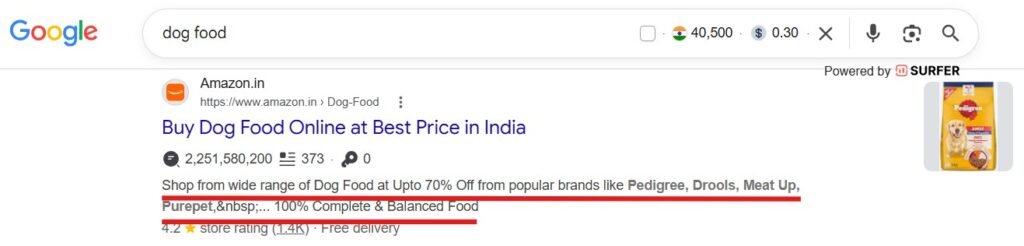
A meta description appears under the title in search results and offers a brief description of the page. It is not necessarily a direct ranking factor, but a comprehensive meta description can improve clicks.
The best tips to optimize meta descriptions include:
- Include your primary keyword naturally in the meta description
- Keep the descriptions to 150-160 characters
- Clearly indicate what the page provides to users
- Share what features or expertise set you apart
5. URL Structure
An SEO-friendly URL slug helps search engines rank better and improve user experience. Try to use simple and descriptive words in the URL as per Google’s URL structure best practices.
You can optimize the URL structure by
- Adding relevant keywords to the slug
- Keep it short and descriptive
- Avoid special characters or unnecessary words
- Use hyphens (-) over underscores (_).
- Avoid any dynamic parameters whenever possible.
- Avoid adding dates to guides as they become irrelevant in a year.
6. Content Quality
Content quality is a cornerstone of SEO to be successful in the digital world. Ensure your content is accurate and aligns with user intent. High-quality content that provides real value performs well on search engines. Google emphasizes content that incorporates Experience, Expertise, Authoritativeness, and Trustworthiness (E-E-A-T) parameters.
The best practices for content quality include:
- Understand the search intent so that you can cater to what the user wants to find on your page.
- Replace outdated information with the latest and most factual content.
- Fix any grammatical errors or duplicate content across your own pages.
- Enhance readability by breaking complex topics or technical terms into simple terms.
- Match your writing style to cater to your audience.
7. Internal and External Links
Links play a crucial role in helping improve authority and crawling. Internal links are essential to improve your website structure and allow users to discover relevant content. It also helps distribute ranking potential across your website. They also strengthen your topical authority, as search engines will categorize you as an expert in the space.
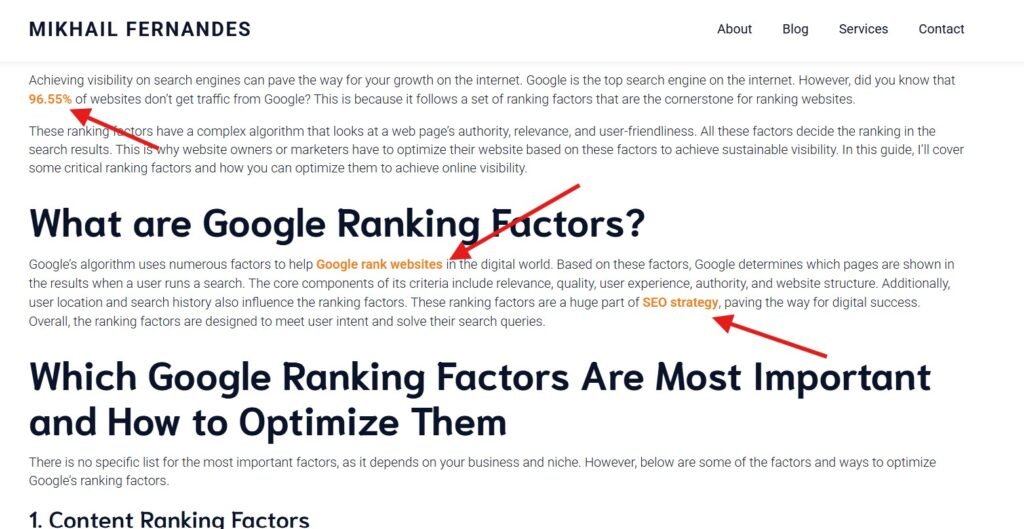
The best practices for internal linking are:
- Link to relevant and high-quality pages to keep users engaged
- Use keyword-rich anchor text to help search engines understand the content
- Link important pages with high authority
- Regularly audit and fix broken internal links
External links help establish credibility when you add links from authoritative sources. The links you insert in your content must support your claim. This will help improve your site’s trustworthiness and quality.
The best practices for External linking are:
- Linking to high-authority sources
- Use nofollow attributes for untrusted or sponsored content
- Ensure these links open in a new tab to retain visitors
- Use a descriptive anchor text to give users a clear idea of what they expect
8. Visual Optimization
Visual content, such as images, videos, and infographics, makes web pages more engaging and easier to understand. This helps strengthen your SEO performance and user experience. Optimizing the visuals includes compressing file sizes, using descriptive alt text, and ensuring fast load times.
When adding visuals to your content, ensure
- Choose visuals to reinforce the content message
- You use descriptive file names and alt text
- Compress images to improve loading speed
- Place images near text they support
- Host videos on YouTube and embed them in the content
- Add captions to videos to make them more accessible
9. Schema Markup
Schema markup allows search engines to understand and display content in their results. It is added to your page’s HTML so that search engines can show your content to relevant search terms. Google supports schema markup in articles, products, events, local businesses, and recipes.
The schema markup helps
- Search engines understand your content better
- Use the FAQ, breadcrumb, and review schema where necessary
10. Technical On-Page SEO
Technical SEO is completely different from on-page SEO, but you need both to perform well. By combining both these parameters, search engines work to deliver results to SERPs. Technical SEO includes fixing broken links, securing the website with HTTPS, increasing site speed, creating an XML sitemap, and more. All this has a major impact on your rankings.
Measuring On-Page SEO Performance
Once you implement on-page SEO, you need to track its performance to see its pros and cons. You need to perform regular audits to improve your ranking and SEO efforts. This can be achieved by using tools such as Google Search Console and Google Analytics. If you want an advanced tool, you can check out SurferSEO. It is a tool designed to analyze your on-page SEO and identify areas for improvement. You can use the platform to monitor ranking changes and adjust your strategies.
Optimize Your Website for On-Page SEO
On-Page SEO is a key parameter to be visible on AI and search engines. However, it is an ongoing process, rather than a one-time task. You need to systematically follow the 10-step checklist to lay a solid foundation for search engines to crawl and rank your pages. It is important to remember that you need to satisfy your customer first rather than simply optimizing your page as per the algorithm.
Monitor the performance of your pages through regular audits. This helps you identify areas that need improvement or learn what is working. Following these best practices, you can create a seamless user experience and improve your ranking.
Want to fast-track your on-page SEO? Get in touch with me. I’ll help craft a personalized plan to optimize SEO and rank well on SERPs.
One response
[…] and budget. So, make sure you select the best tool for your SEO tracking. If you want the best on-page SEO tool for SEO tracking, then SurferSEO is the best out […]